BABY BOTOX VS FULL BOTOX
September 24, 2026
Under-Eye PRP vs. Fillers
September 25, 2026
Botox vs. Dermal Fillers: Understanding the Difference
When it comes to facial aesthetics, Botox and dermal fillers are two of the most well-known treatments—but they are not interchangeable.
At Quench, we believe aesthetic treatments should enhance your natural features rather than change who you are. Botox and fillers each serve a different purpose, and understanding how they work can help you make a more informed decision about what may be right for you.
And if you’re not sure where to start, that’s what a personalized consultation is for.
Botox: Soften Movement, Smooth Lines
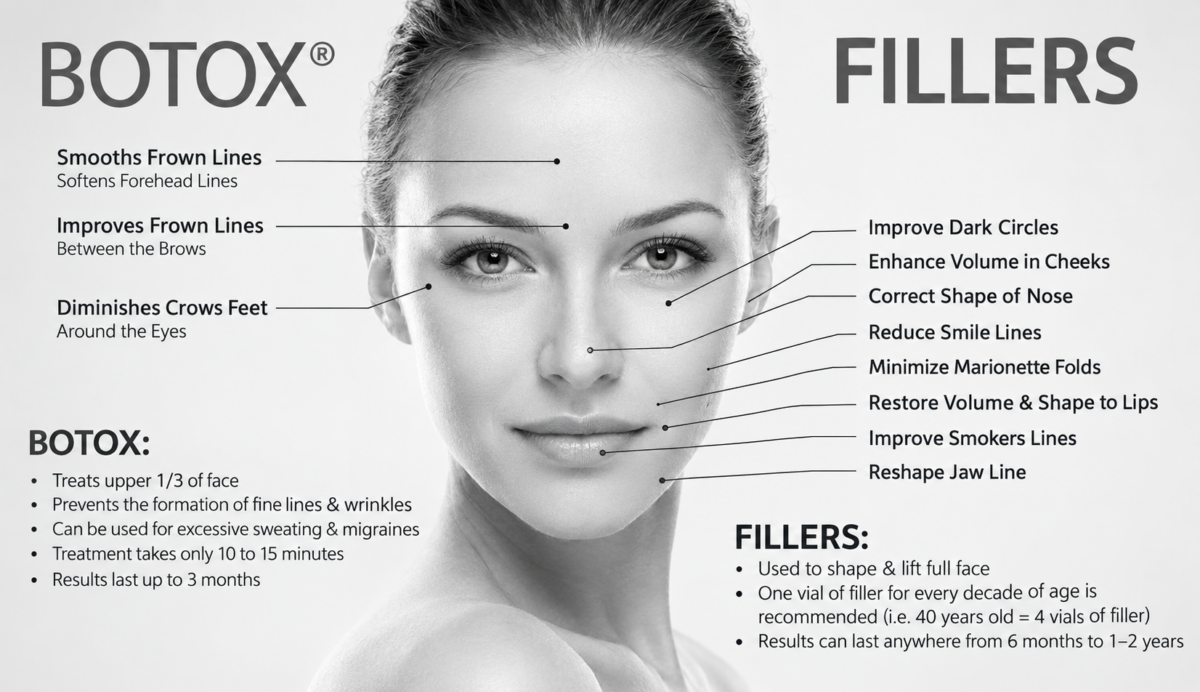
Botox works by temporarily relaxing targeted muscles that contribute to repetitive facial movements. By reducing excessive muscle activity, Botox can soften the appearance of dynamic lines while maintaining natural facial expression.
Botox may be suitable for:
- Forehead lines
- Frown lines or “11s”
- Crow’s feet
- Preventative approaches to visible signs of aging
- Jaw or shoulder tension
The result
The goal is smoother, more relaxed-looking skin while preserving your natural expressions. When thoughtfully administered, Botox can create a refreshed appearance without making the face look frozen or overly treated.
Dermal Fillers: Restore Volume and Create Structure
Unlike Botox, dermal fillers are designed to restore or add volume and enhance facial contours.
As we age, natural volume can gradually decrease in areas of the face, sometimes affecting definition and balance. Dermal fillers can help restore fullness, enhance proportions and create more defined contours.
Dermal fillers may be suitable for:
- Lips
- Cheeks
- Jawline and chin
- Under-eye areas
- Smile lines
The result
Fillers can help create a more balanced, defined and sculpted appearance while maintaining harmony with your existing facial features. The objective isn’t to look “filled”—it’s to look naturally refreshed and proportionate.
Botox vs. Fillers: What’s the Real Difference?
The simplest way to understand the distinction is:
Botox treats movement.
Fillers treat volume and structure.
Botox works by relaxing specific muscles that contribute to expression lines.
Fillers work by adding or restoring volume in selected areas to enhance shape, contour and proportion.
In other words:
One relaxes. One restores.
Neither treatment is universally “better” than the other. They simply address different aesthetic concerns.
Which Treatment Should You Start With?
You don’t necessarily need to know the answer before your appointment.
During a consultation at Quench, your concerns, facial anatomy, goals and desired level of enhancement can all be considered when determining whether Botox, dermal fillers, or another approach may be appropriate.
As a general guide:
If you notice lines that appear with movement
For example, forehead lines, frown lines or crow’s feet that become more noticeable when you smile, frown or raise your eyebrows, Botox may be a suitable starting point.
If you notice loss of volume or definition
If you’re noticing less fullness in the lips or cheeks, or reduced definition around the chin or jawline, dermal fillers may be worth exploring.
Sometimes, both treatments may be used as part of a broader facial balancing approach—but only where appropriate for your individual needs.
The Quench Approach to Natural-Looking Results
At Quench, aesthetic treatments are not about changing your face or following a one-size-fits-all formula.
The focus is on balance, proportion and intentional enhancement.
Whether you’re considering Botox, dermal fillers or simply exploring your options, the right treatment starts with understanding what you want to achieve and choosing an approach that complements your natural features.
Not Sure Where to Begin?
You don’t have to decide on your own.
Book a consultation with the Quench team to discuss your goals and explore whether Botox, dermal fillers, or another treatment may be right for you.
Refined. Balanced. Intentionally you.